LiftMaster/Chamberlain error code 1-6 means RPM was detected after the motor shut off at the open position. Chamberlain Group says the door may move down after reaching open, and wall-mount/RJO units can show this code during manual operation. Check door balance and make sure any manual release is correctly reconnected before treating the code as an internal opener failure.
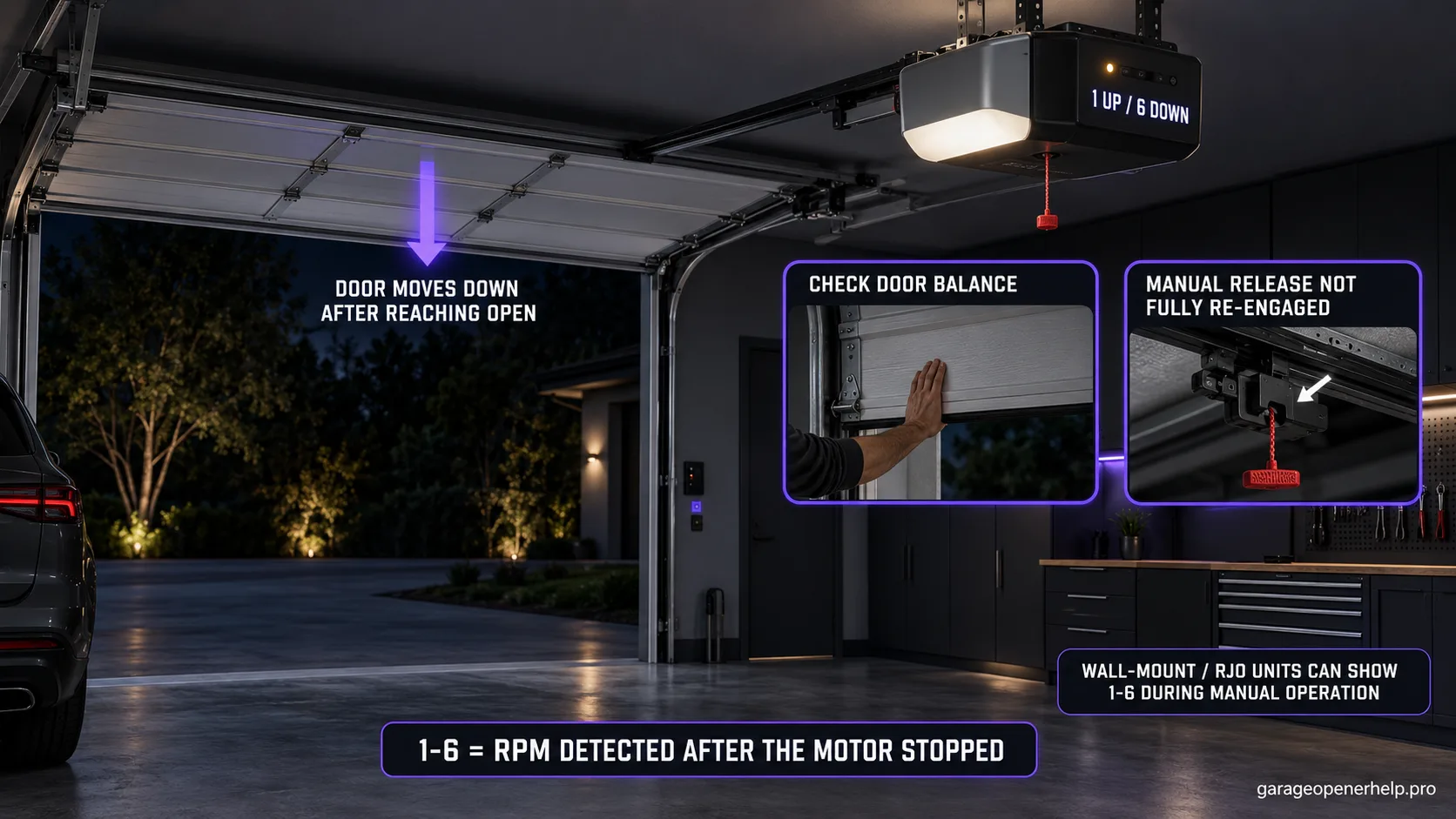
Separate a powered drift from manual jackshaft movement
The door's motion and whether someone used the manual release distinguish the main manufacturer-documented 1-6 branches.
| When 1-6 appears | Documented interpretation | Safe next step |
|---|---|---|
| Door drifts down after reaching fully open | Unexpected movement / RPM after the opener motor stops; balance may be involved | Stop repeated operation and arrange door-balance service if the door will not stay up. |
| A wall-mount/RJO door was moved by hand | The opener can detect shaft movement while its emergency release is disconnected | Use the exact model instructions to reconnect; record whether the code clears on normal operation. |
| Code occurs during closing after manual disconnect | Release state may prompt the opener to respond to door motion | Do not change travel limits until release status and exact model are confirmed. |
| Someone recommends accessory-module wiring or factory reset | That is not the official 1-6 door-movement definition | Do not follow unrelated 1-6 pages; use the Chamberlain diagnostic table. |
A balance test is not spring adjustment. Never loosen springs, cables, pulleys or brackets. If the door is heavy, crooked or will not stay open, stop and contact a trained door technician.
Diagnostic snapshot
- Answer
- Code 1-6 means RPM was detected after the motor shut off at the open position.
- Check first
- Note whether the code followed manual operation, then check door balance and manual-release reconnection using the exact model procedure.
- Strong clue
- Door movement after the powered open cycle or a recent manual-release event fits this branch better than a sensor fault.
- Model / generation note
- Chamberlain Group notes RJO openers can show this code during manual operation.
This exact manufacturer signal can feed the following diagnostic family. Keep the original code or LED pattern when troubleshooting.
What you are likely to notice
- The opener reports 1 UP / 6 DOWN
- The door reaches open and then moves down after motor shutoff
- An RJO/wall-mount opener may show the code during manual operation
- A closing door may trigger a motor attempt to reopen when the manual disconnect is involved
Check these in order
1. Record whether the code followed manual operation
Chamberlain Group specifically notes that RJO openers can show 1-6 while the door is operated manually. That context changes the diagnosis: a code immediately after a manual-release event is not the same evidence as a ceiling opener that repeatedly drifts after every powered open cycle.
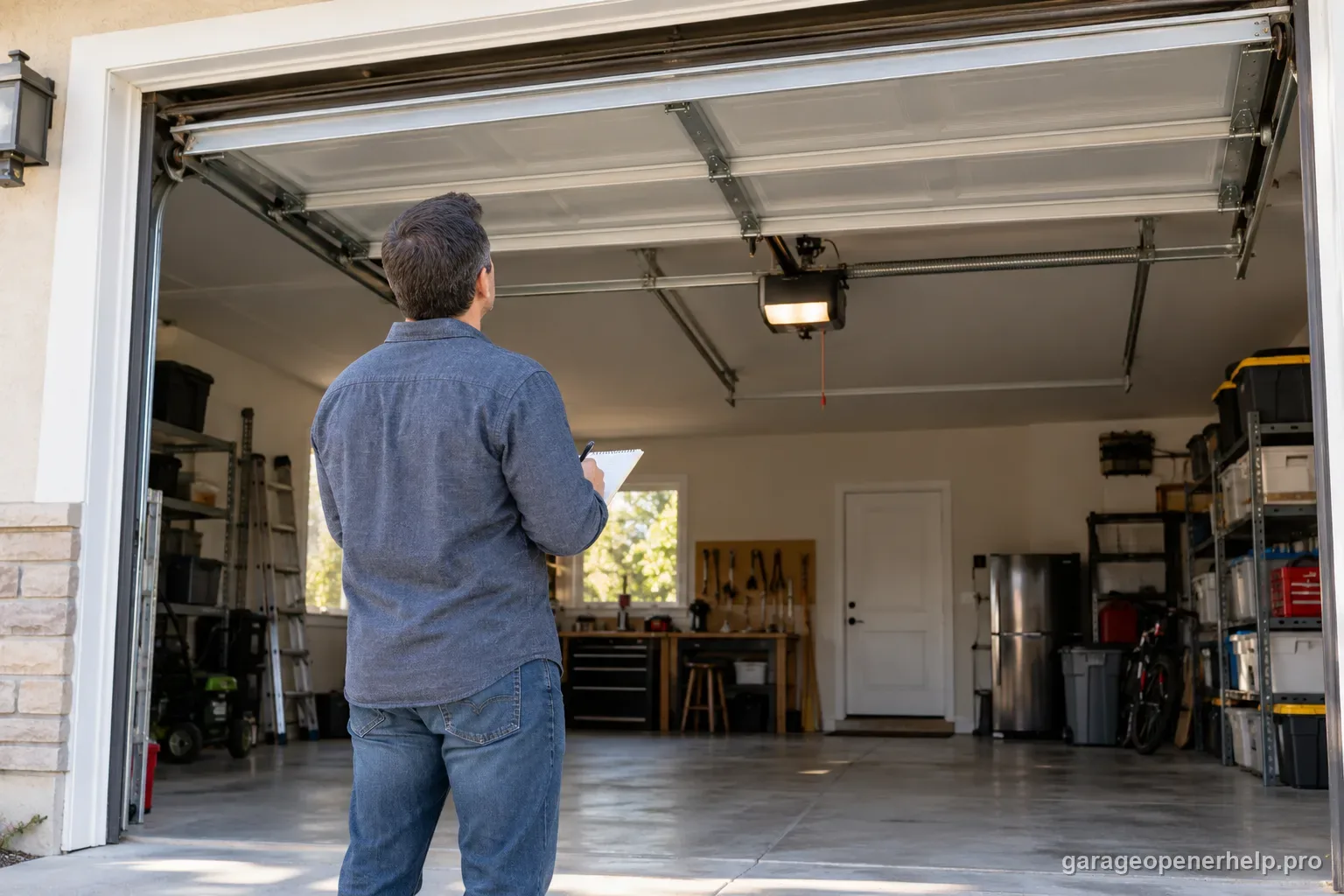
2. Check door balance using only the safe manual procedure
For a door that reaches the open position and then moves down, the manufacturer points to door balance. With the door in a safe state, follow the model manual's release procedure and observe whether the door is unusually eager to fall or rise. Springs, cables and counterbalance hardware are not homeowner adjustment items.
3. Confirm the manual release is fully reconnected
If the motor attempts to reopen a closing door, Chamberlain Group lists a pulled manual disconnect as a documented branch. Reconnect it exactly as the opener manual specifies and verify the trolley or wall-mount release state before changing limits or force.
4. Separate door motion from sensor faults
Code 1-6 is an RPM/movement condition at the open end of travel. Do not copy fixes from 1-1, 1-2 or 4-6 merely because those codes are common. If balance and release state are normal but the code persists, move to model-specific drive/travel diagnosis or dealer service.
The key clue is motion after motor shutoff
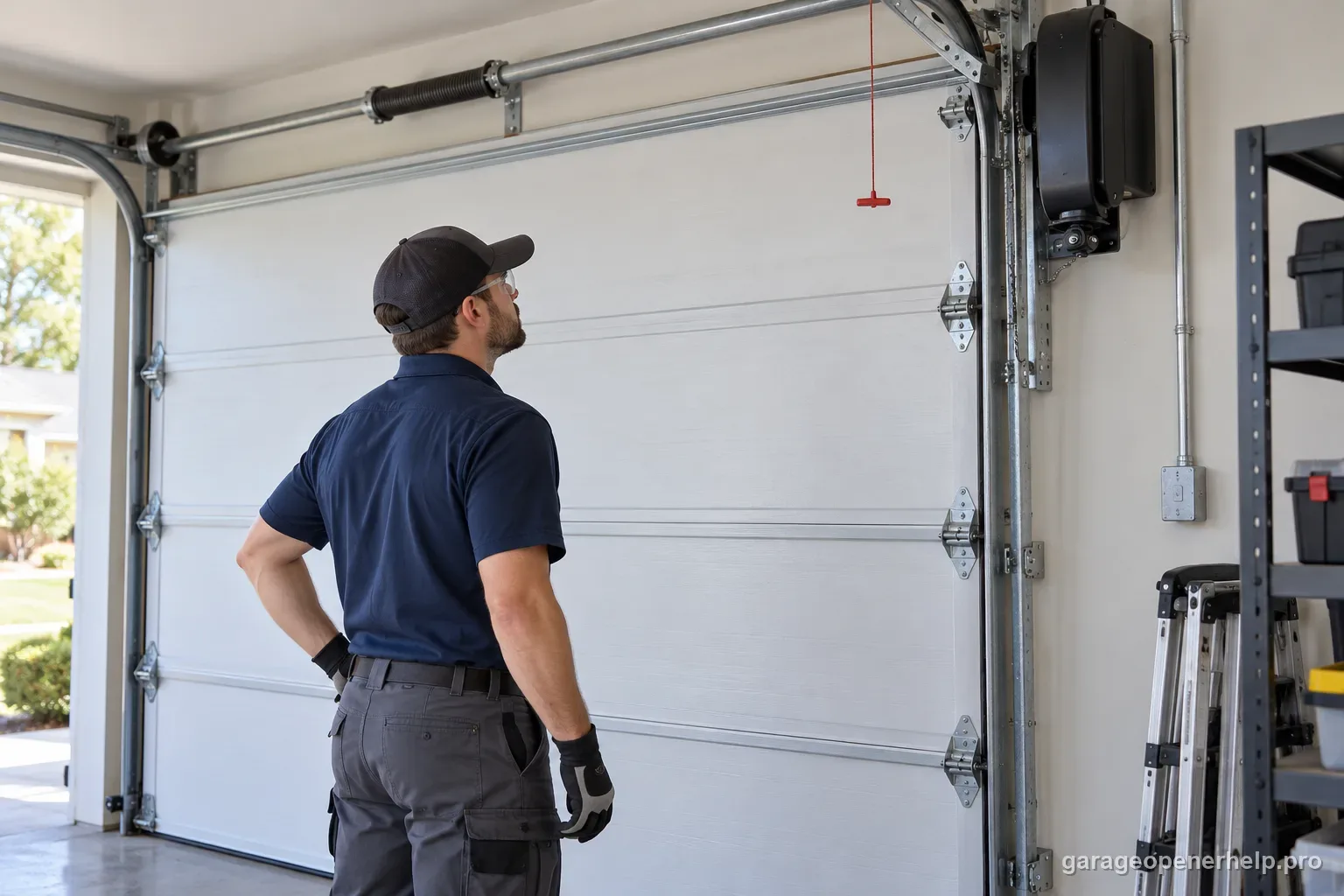
Code 1-6 is not simply an 'open limit' message. The official definition says the operator detected RPM after the motor had already shut off at the open position. The physical observation—door movement after the powered open cycle—therefore matters more than a generic reset.
On RJO/wall-mount systems, manual door operation can itself produce the code. That is why the recent use of the emergency release belongs in the first diagnostic question.
Why door balance comes before electronics
Chamberlain Group sends the user to a door-balance test when the opener reaches open and the door then moves down. A door that cannot remain reasonably balanced changes the mechanical load seen by the operator and should be serviced as a door problem before an electronic diagnosis is trusted.
If balance is normal and the release is fully reconnected but 1-6 repeats, preserve the exact model and behavior for dealer-level diagnosis. Do not compensate by increasing force or changing travel limits without a model-specific reason.
A useful handoff note for a technician
Write down whether the door reached the exact open limit, whether it drifted immediately or after a delay, and whether the opener had just been manually released. Those details separate a balance/release event from an internal feedback problem much better than simply reporting that the opener 'acts weird at the top.'
Also record whether the symptom is repeatable on every open cycle. A repeatable powered-motion event after normal balance and reconnection deserves model-specific service attention; a one-time code immediately after manual operation on an RJO may fit the manufacturer's documented exception.
Stop DIY troubleshooting when…
- The door drops, shoots upward or will not remain safely balanced
- A spring, cable or drum appears damaged
- The manual release will not reconnect normally
- The code returns with normal balance and release state
Garage door springs, cables and a falling/unbalanced door can store or release dangerous force. Those are door-system problems, not just opener settings.
Common questions
Can manual operation trigger 1-6 on a wall-mount opener?
Yes. Chamberlain Group specifically notes that RJO openers can show 1-6 while the door is manually operated.
Does 1-6 mean the safety sensors are blocked?
No. The code is about RPM being detected after motor shutoff at the open position, not the safety-sensor beam.
Should I adjust the springs if the door drifts down?
No. Springs and cables store dangerous energy. A door that is not properly balanced should be handled by a qualified door technician.
Manufacturer sources used
These links are the factual baseline for the diagnostic claims above. Model-specific manuals can supersede general guidance.