On supported LiftMaster and Chamberlain openers, 4-UP/3-DOWN means motor RPM was lost during closing. The door can stop and reverse before reaching the floor. Chamberlain Group lists a loose travel-module assembly or its wires as possible causes and says dealer service is the best fix. Confirm the opener model and exact diagnostic display; do not open the motor housing or replace sensors based on this code alone.
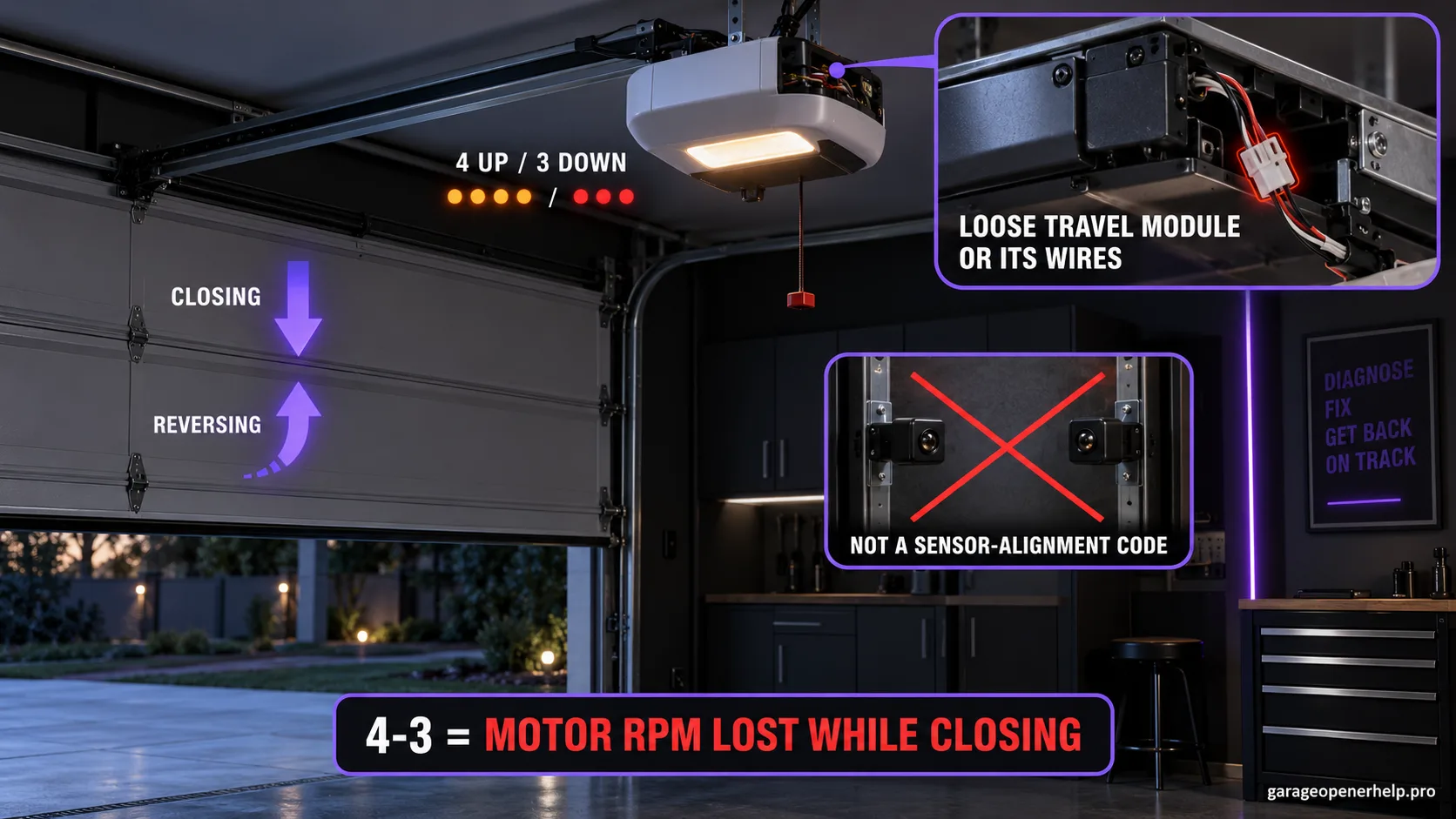
Separate the confirmed 4-3 code from similar closing symptoms
The same door movement can come from different branches; use the diagnostic display and safe observations together.
| Evidence | What the source supports | Next step |
|---|---|---|
| 4-UP / 3-DOWN confirmed; door reverses before floor contact | RPM lost during DOWN travel; a loose travel-module assembly or its wiring is listed as a possible cause | Record model, reversal point and recent service; contact a dealer for internal diagnosis. |
| Door will not close, but no 4-3 code is present | A symptom alone does not establish the motor-RPM fault; sensor, obstruction and other closing branches remain possible | Read both sensor LEDs and the actual opener code before choosing a guide. |
| Door is crooked, unusually heavy or visibly binds | Mechanical resistance or door damage may make operation unsafe; this does not identify a failed opener component | Stop cycling and call a door-systems technician; do not adjust springs or cables. |
| Code began after opener or travel-module service | Timing is useful context but does not prove a particular connector or part failed | Give the dealer the installed opener model, service date and any replaced part details. |
| Only sensor LEDs look abnormal; no 4-3 code is confirmed | This is not enough to label the issue as code 4-3 | Use the exact model's sensor diagnostic path and preserve any separate code. |
Chamberlain Group describes 4-3 as an RPM-loss/dealer-service branch. This comparison helps classify observations; it is not a homeowner repair procedure and does not override the exact opener manual.
This exact manufacturer signal can feed the following diagnostic family. Keep the original code or LED pattern when troubleshooting.
What you are likely to notice
- The door stops during a close attempt and reverses before touching the floor
- The opener or supported myQ diagnostic path records 4-3 / 4-UP, 3-DOWN
- The door may appear to have a sensor problem because it returns open, even though 4-3 belongs to a motor-RPM/travel-module branch
Check these in order
1. Confirm the code and opener model
Read the UP/DOWN indicator sequence on the opener or capture the exact supported myQ diagnostic message. Record the model number from the motor-unit label. A generic flash count, an unrelated sensor LED, or a similar-sounding code is not enough to identify this branch.
2. Record where the door reverses
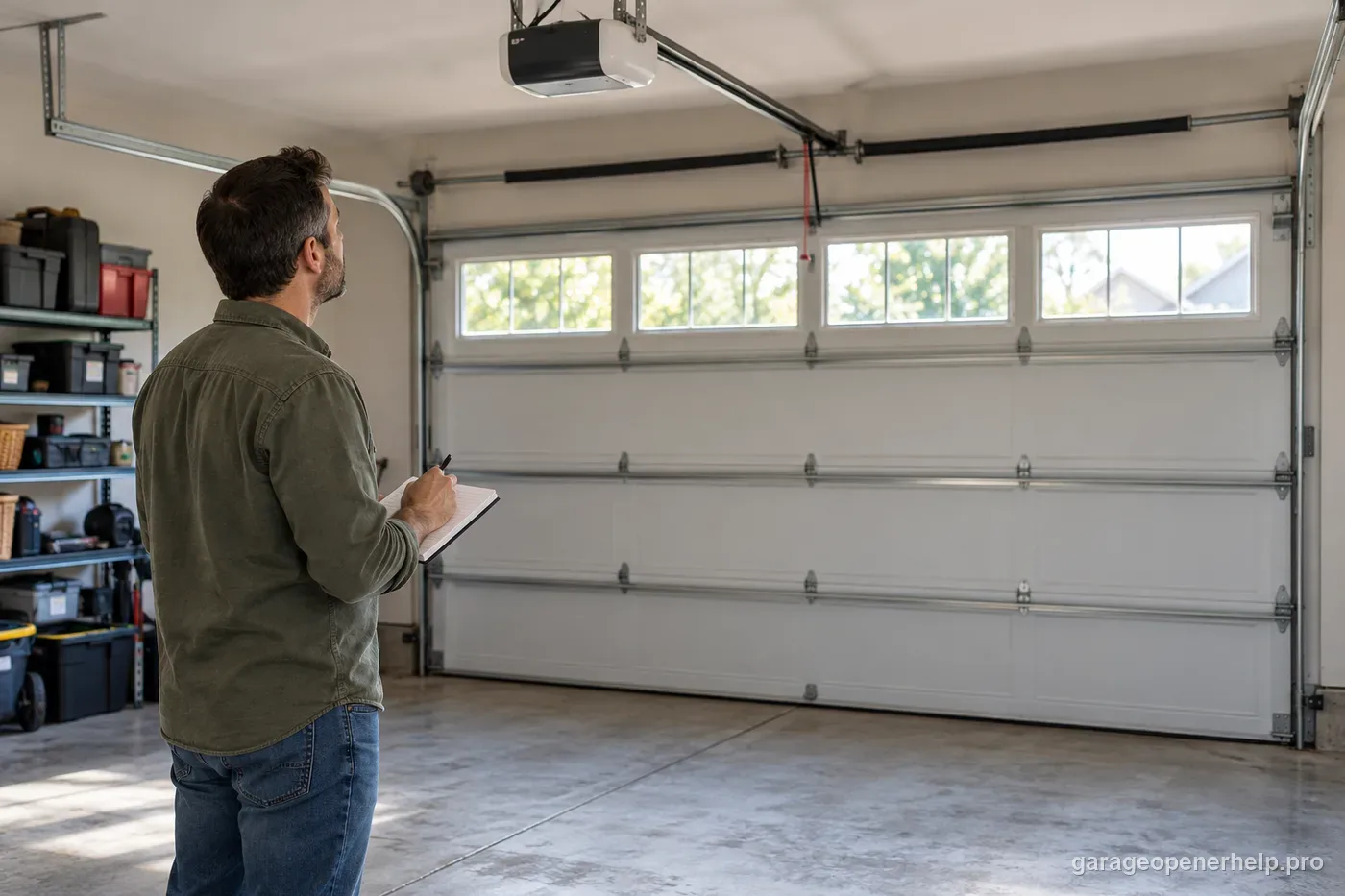
From a clear position with the entire doorway visible, note whether the door stops at a repeatable height, reverses before floor contact, or reaches the floor first. Do not keep cycling it to reproduce the fault; one clear observation and the returned code are more useful than repeated strain.
3. Look only for an obvious external bind
With the opener idle, visually check the doorway and track area for an object, visibly damaged roller or a door sitting crooked. Keep hands away from moving parts. A heavy, dropping, uneven or binding door is a door-system service issue; do not pull the emergency release on an unstable door or adjust springs and cables.
4. Keep the photo-eye branch separate
Photo eyes can cause other closing problems, but the confirmed 4-3 definition is loss of motor RPM during DOWN travel, with travel-module assembly/wiring among the manufacturer's listed causes. Note the sensor LED states if relevant, but do not replace sensors or endlessly re-aim them as a 4-3 repair.
5. Hand off internal module or wiring checks
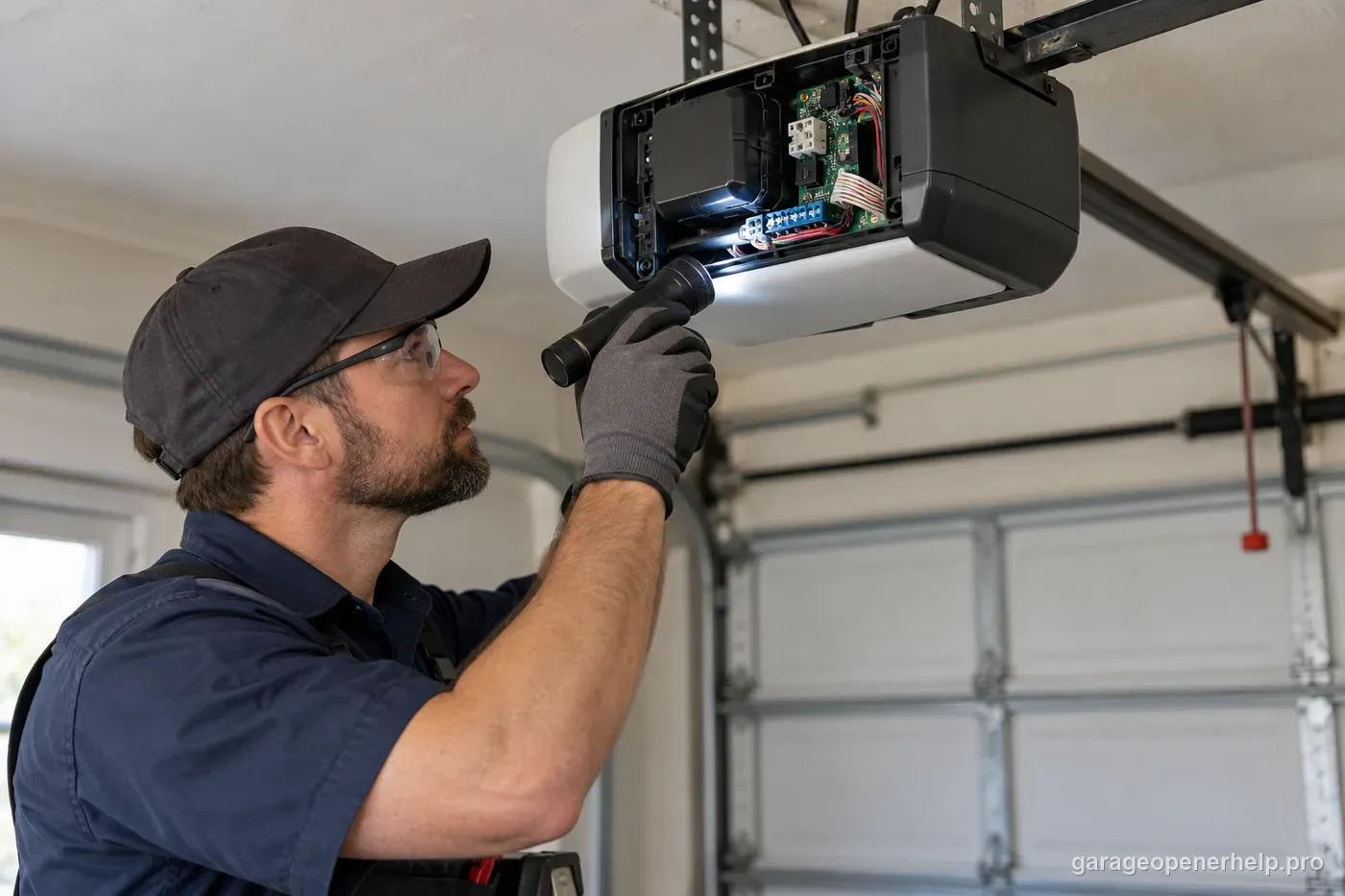
Chamberlain Group says this code is best fixed by a dealer. Do not remove the opener cover, probe connectors, or attempt to reseat internal module wiring. Tell the dealer the model, exact code, reversal point, visible door condition, and whether the issue began after opener or travel-module service.
Why 4-3 belongs in the motor/travel-module branch
The official description is unusually specific: the operator detected loss of motor RPM while trying to close, and Chamberlain Group lists a loose travel module or connecting wires as possible causes. That makes 4-3 materially different from a photo-eye alignment problem even though both can end with a door reversing open.
This is why symptom-only advice can be misleading. 'Door closes then reverses' has several branches; a confirmed diagnostic code narrows the discussion, while a vague flash count does not. Chamberlain's broader diagnostic table places 4-UP/3-DOWN in the closing-cycle RPM branch and describes the before-floor reversal. A separate no-code closing complaint still needs sensor, obstruction and other model-specific checks.
What a homeowner can safely verify
You can document the code, the physical reversal point, the opener model, recent service history and whether the door itself has an obvious bind. That information is useful without opening the operator housing or probing internal connections.
If recent service involved a travel module, logic board or internal wiring, mention that sequence when contacting a dealer. It is useful timing, not proof that a particular connector is loose. A fault that appears after component work deserves an exact-model parts and connection check before unrelated sensors are replaced.
Why this guide stops before opening the motor housing
Some search results suggest removing the cover, reseating a harness, inspecting an RPM sensor or replacing a module at home. That goes beyond Chamberlain Group's own 4-3 page, which says dealer service is best. The internal part and diagnostic path vary by opener generation, and a guessed repair can introduce a new fault or expose the operator's electrical components.
The safe homeowner contribution is high-quality evidence: exact model, confirmed UP/DOWN sequence, where the door reversed, whether the fault followed service, and any visible door damage. A qualified dealer can use that record with the correct model documentation to decide whether the travel module, wiring or another cause needs testing.
4-3 is a down-travel RPM-loss branch
Chamberlain Group defines 4-3 as loss of motor RPM during DOWN travel. The published behavior is a door that stops and reverses before touching the floor, and the listed causes include a loose travel-module assembly or loose travel-module wiring. That makes a confirmed 4-3 materially different from a photo-eye obstruction even though both can end with the door returning open.
Do not erase the code and begin with generic sensor alignment. Record the 4-UP/3-DOWN signal, the reversal height and whether the problem began after internal opener service. Chamberlain's dedicated 4-3 page says this condition is best fixed by a dealer, so homeowner troubleshooting should focus on documenting the branch and ruling out an obvious dangerous door bind rather than opening the operator and probing internal connections.
- Confirm 4-UP/3-DOWN and a reversal before floor contact.
- Keep travel-module assembly/wiring high in the branch.
- Use dealer/service support for internal module or wire-harness work.
Capture 4-UP/3-DOWN, the reversal height and any recent travel-module or internal opener service. If the door itself moves abnormally by hand, record that separately and stop. A technician can then distinguish a door-system problem from the travel-module assembly/wiring branch that Chamberlain associates with the code.
Stop DIY troubleshooting when…
- The opener housing would need to be opened
- The door is heavy or binds by hand
- You see damaged connectors, burned components or wiring
- 4-3 returns after obvious external obstruction is ruled out
Garage door springs, cables and a falling/unbalanced door can store or release dangerous force. Those are door-system problems, not just opener settings.
Common questions
Does LiftMaster 4-3 mean the safety sensors are bad?
The official 4-3 description points to loss of motor RPM and possible travel-module connections, not primarily to safety-sensor alignment.
Can I fix 4-3 by resetting travel limits?
Do not reset travel limits as a guess. Use a travel procedure only if the exact model documentation calls for it; Chamberlain Group describes 4-3 as best fixed by a dealer.
Why does the door reverse before reaching the floor?
For a confirmed 4-3 code, the manufacturer ties that behavior to the motor-RPM fault branch. Without a confirmed code, the same visible symptom can have other causes.
Should I open the opener and reseat the travel-module wires?
No. The manufacturer recommends dealer service for this code. Record the model, code and symptom timing, then have a qualified technician inspect internal components.
Manufacturer sources used
These links are the factual baseline for the diagnostic claims above. Model-specific manuals can supersede general guidance.